

Many beginners who just picked up tennis grab their new racket and start playing with the stock grip right away. Some even think wrapping overgrip is unnecessary and that a bare grip gives you the purest feel. But the truth is, the consequences of playing long-term without overgrip are far more serious than you think. Problems will pile up one after another, and they all trace back to the same fact — overgrip is not just a piece of "tape." It is the most important line of defense between you and your racket.
The most basic and core function of overgrip is to protect your racket. Original tennis racket has virtually no sweat-absorbing ability. The moment you start playing, the sweat from your palms seeps directly into the wooden handle with nothing to block it. Wood absorbs moisture, and when it is soaked in sweat over time, the handle will gradually swell, warp, and its surface will start to peel and crack. In severe cases, it can even grow mold and smell terrible. Even worse, sweat contains salt and acidic substances that slowly corrode the grip material, significantly shortening the racket's lifespan. A racket that cost you hundreds or even thousands of dollars could be completely ruined in just six months because you skipped the overgrip. By that time, repairing it would cost much more than buying a overgrip — and it still may not look or feel the same again. Overgrip is like a raincoat for your racket, keeping all sweat and grime out. When it gets dirty, just swap it out. A few dollars in cost buys you years of your racket looking and performing like new.
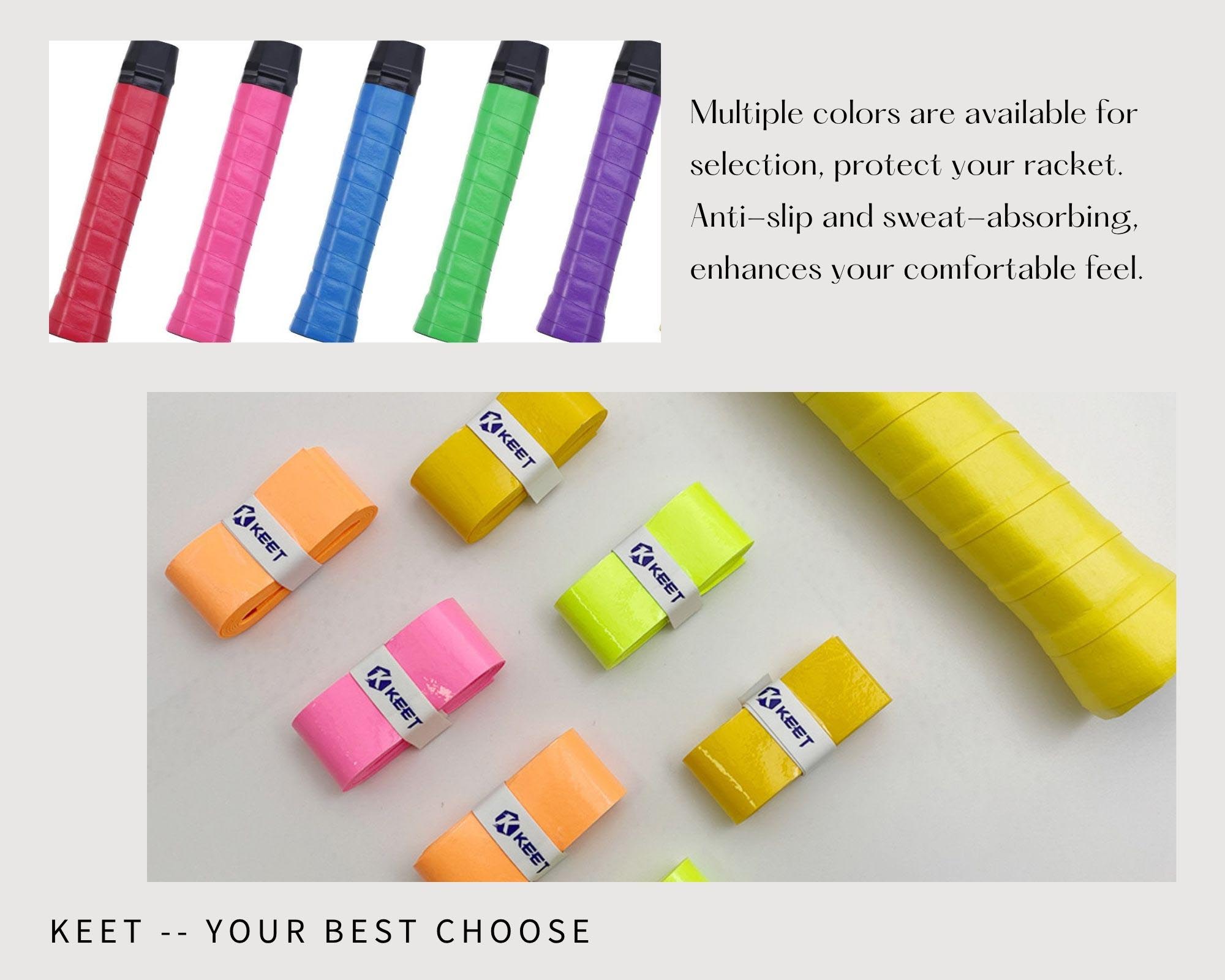
The anti-slip and sweat-absorbing role of overgrip during play is equally important. Tennis is a sport that demands extremely high grip stability. Every shot requires precise friction between your palm and the handle. A bare racket offers very limited friction, and the moment your palms start sweating, the grip surface becomes slippery almost instantly, making the racket easy to lose hold of. Overgrip, on the other hand, provides consistent friction in both dry and sweaty conditions, letting you maintain full control of your racket in every situation — whether you are driving a forehand, slicing a backhand, serving, or smashing an overhead.
Beyond that, overgrip also serves as a shock absorber and enhances your comfortable feel. Every time the racket hits the ball, high-frequency vibrations are generated and travel up the handle into your palm, wrist, and even your entire arm. Without the cushioning of overgrip, these vibrations hit you harder and more directly, making your wrist and arm prone to fatigue and soreness after long sessions and potentially setting the stage for injury. Overgrip has a certain thickness and elasticity of its own — it acts like a soft pad that filters out some of the uncomfortable vibrations, making the feedback from every shot softer and more controlled. At the same time, the material and thickness of the overgrip also affect your overall perception of the racket. Thinner overgrip keeps you closer to the racket's native feel, while thicker overgrip delivers a fuller, more cushioned grip. You can choose based on your playing style and personal preference.
So the next time you get a new racket, don't rush onto the court. Take a few minutes to wrap on a proper overgrip. It protects not just your racket, but also the stability and confidence you feel with every swing. A seemingly ordinary strip of overgrip gives you a longer racket lifespan, a safer grip, and a more comfortable playing experience.
Please Read On, Stay Posted, Subscribe, And We Welcome You To Tell Us What You Think.
Connect With Us


Copyright @2024 Xiamen Keet Sports Technology Co., Ltd. All Rights Reserved. Sitemap/Blog/Xml/Privacy Policy  Network Supported