Do you know how to buy and use badminton racket grip tape?
May 14, 2026
Badminton grip tape — this seemingly insignificant little accessory actually determines the feel of every grip, the stability of every shot, and even affects your overall performance on the court. Many people spend thousands on a racket and hundreds on stringing, yet pay little attention to the grip tape. This is actually a big misconception. Today, let's have a thorough discussion on how to choose, use, and replace badminton grip tape — so you'll never lose points over this small detail again.
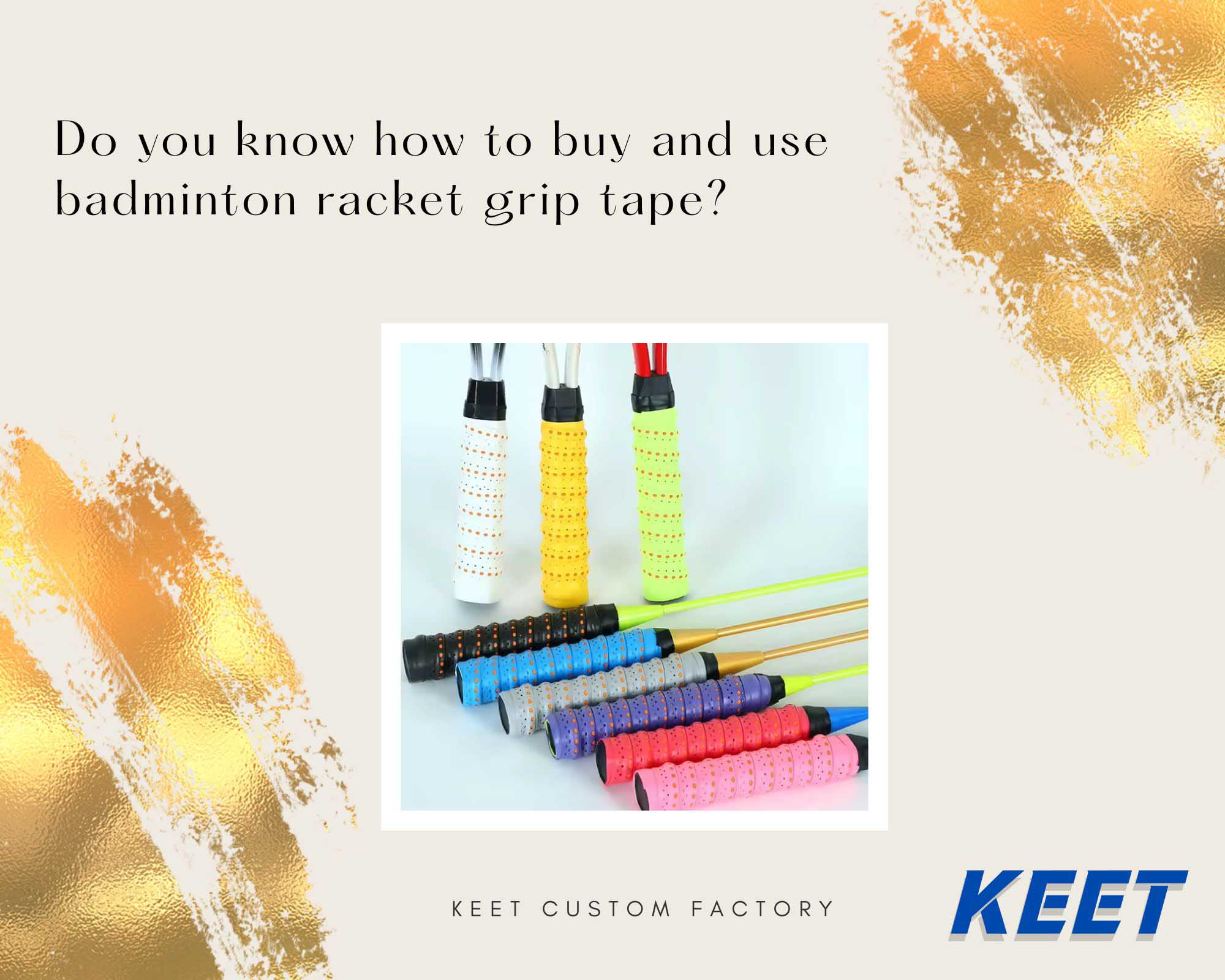
First, let's talk about how to buy badminton grip tape — this is a question many customers care about. The market is flooded with brands and types of badminton grip tape, which can be downright dazzling. In reality, the three core factors you need to understand when choosing badminton grip tape are: material, thickness, and feel. The most common material on the market currently is PU (polyurethane). It offers good elasticity, durability, and a refined feel, making it the first choice for the vast majority of players. Another type is towel grip tape, which has a terry cloth surface with extremely strong sweat absorption — ideal for players who sweat a lot. However, its downsides are that it's relatively bulky, alters the racket's original grip feel, and isn't very durable. Then there's keel grip tape, the kind with a raised ridge running along it. Its advantage is that it can wick sweat quickly without needing an undergrip, and it's fast to apply. But some players feel it doesn't fit snugly enough in the hand, which can affect fine shot control.
Next, how to choose the thickness of badminton grip tape. Grip tape comes in thin and thick versions. Thin grip tape is suited for technical players who prefer a delicate feel and precise shot control — it preserves the racket's vibration feedback to the greatest extent, allowing you to clearly feel every detail at the moment of impact. Thick grip tape, on the other hand, offers a fuller, more comfortable grip. It's better suited for aggressive players who hit hard, or for those with larger hands who need more cushioning.
As for the surface feel of badminton grip tape, it mainly comes in two types: dry grip tape and tacky grip tape. Dry grip tape has a slightly rough, abrasive surface that maintains a certain level of friction even when your hands are sweaty — making it suitable for players with moderate to heavy perspiration. Tacky grip tape, on the other hand, gets stickier the more you sweat. It may feel a bit slippery when you first apply it, but once your palms start to sweat, it becomes incredibly snug — almost like it's grown onto your hand. This is also why many professional players prefer tacky grip tape.
Second, how to apply the badminton grip tape? Start wrapping from the bottom of the racket handle, spiraling upward. Each wrap should overlap the previous one by about one-third — don't leave any gaps, or over time the tape will wrinkle, collect dust, and even come off. Apply even tension while wrapping — not too loose and not too tight. If it's too loose, the tape layers will shift, making the grip unstable. If it's too tight, the tape will overstretch, lose its elasticity, and is likely to tear. Once you reach the top of the handle, use the adhesive finishing tape that comes with the grip tape to secure the end, then trim off the excess with scissors. The whole process takes about two to three minutes if you're experienced. If it's your first time, you may need a few tries — don't rush, take your time.
Finally, a very crucial question: how often should you replace your badminton grip tape? There's no one-size-fits-all answer, as it depends on your playing frequency, sweat level, and the quality of the badminton grip tape. But here's the simplest way to tell: when you notice the surface has been worn shiny and slippery, with no friction left when you grip it — or when the tape starts getting sticky, smelly, or even flaking apart — it's time to replace it. Some people are reluctant to change it, thinking they can keep using it as long as it's not completely falling apart. But in reality, dirty, worn-out grip tape not only affects your grip and shot control — the accumulated sweat and bacteria can also corrode the racket's wooden handle. Over time, the damage to the handle is irreversible. A grip tape costs not expensive, but a good racket will be relatively expensive. So the cost-effectiveness of regularly replacing grip tape is extremely high.
In conclusion, although badminton grip tape is just a small accessory, its impact on your playing experience is far greater than you might think. Choose the right material, thickness, and feel; wrap every turn properly; and replace it in time. Get these three things right, and you'll find your grip is steadier, your shot control is more precise, and your game is simply more comfortable.




 Network Supported