What should i consider when deciding to add a vibration dampener to my racket?
Apr 02, 2026
For many tennis enthusiasts, a racket vibration dampener is a seemingly minor yet potentially crucial accessory that can impact the overall hitting experience. It not only reduces the vibration transmitted to the arm from the collision between the strings and the ball during a hit, lowering the risk of sports injuries, but also alters the feel and sound feedback during hitting by adjusting the vibration frequency. However, with a wide array of vibration dampener types and brands available on the market, how can one select a product that truly suits their needs? This requires a comprehensive consideration from multiple dimensions, including the vibration-dampening principle, personal technical characteristics, racket compatibility, and long-term usage requirements.
The core function of a vibration dampener is to absorb or disperse the vibration energy generated during hitting, with its effectiveness directly depending on the material and structural design. Common materials for vibration dampeners include rubber, silicone, etc. Rubber dampeners are affordable and moderately elastic, suitable for most amateur players; silicone dampeners, with their higher density and greater durability, have become a popular choice among advanced players. Additionally, the shape design of the vibration dampener is also crucial. Strip-shaped dampeners offer wide coverage, suitable for players seeking comprehensive vibration reduction; circular or oval dampeners are more precise, optimizing the feel for specific areas. When selecting, it's advisable to first understand the characteristics of different materials and structures, and then conduct an initial screening based on your own sensitivity to vibration.
The compatibility of a vibration dampener should be closely integrated with personal technical characteristics and racket parameters. For players who primarily employ a control-oriented playing style, precision in ball placement and feel feedback during hitting are more important. Excessive vibration dampening may weaken the contact sensation between the strings and the ball, leading to a decline in ball control. In this case, lightweight, low-vibration-intensity products, such as small silicone dampeners, are more suitable. On the other hand, power players or beginners, who hit with greater force and experience stronger vibrations in their arms, may prioritize strip-shaped dampeners with more significant vibration-dampening effects. Furthermore, the string pattern density (e.g., 16×19 vs. 18×20) and string tension of the racket also influence the choice of vibration dampener—a denser string pattern and higher tension result in more direct vibration transmission during hitting, necessitating a product with stronger vibration-dampening effects; conversely, rackets with lower tension or an open string pattern inherently have better elasticity and may have relatively lower vibration-dampening requirements.
The feel and sound feedback during hitting are easily overlooked yet crucial factors in selecting a vibration dampener. Many professional players are obsessed with the "crisp sound" during hitting, considering it a signal of power transmission and precise ball control. A vibration dampener can significantly alter this sound, with rubber or silicone dampeners potentially making the sound duller. If sensitive to sound, one can first experience the sound differences of various dampeners or choose dampeners with adjustable positions to fine-tune the sound feedback by adjusting their placement. Additionally, although the weight of a vibration dampener is small, installing it at the top of the racket may slightly alter the racket's balance point, affecting swing weight and maneuverability.
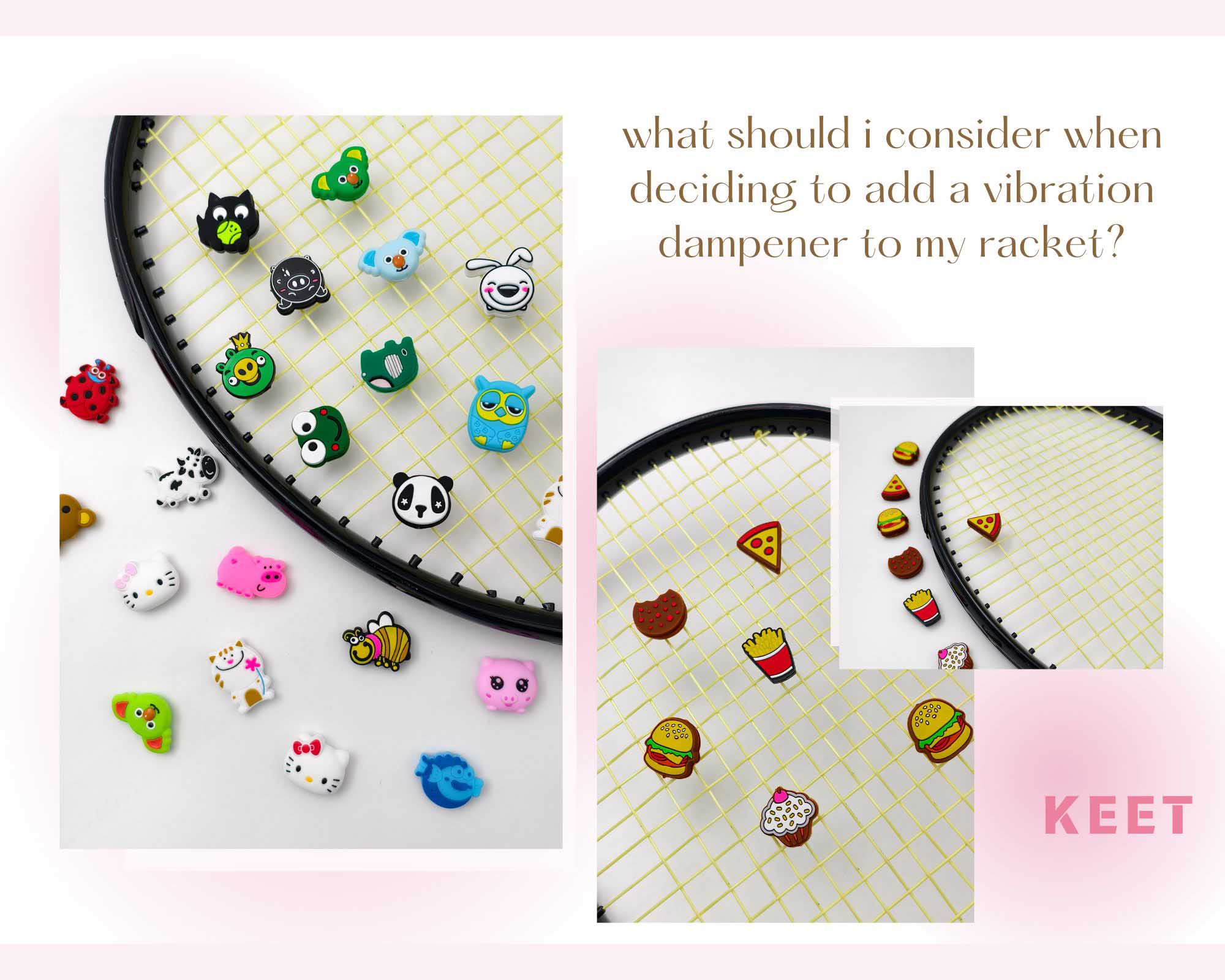
Long-term usage requirements and scenario compatibility are also considerations that cannot be ignored. If you frequently play in humid or dusty environments, it's advisable to choose silicone or gel dampeners with strong waterproof and dustproof properties to prevent a decline in vibration-dampening effects due to material aging. If you participate in competitions frequently, you can prepare multiple dampeners with different vibration-dampening intensities and flexibly switch them based on your opponent's characteristics or court conditions. For players pursuing personalization, the color, pattern, and even brand culture of the vibration dampener may also become selection factors—KEET's vibration dampener, can meet functional needs while also showcasing personal style.
Selecting a racket vibration dampener is a balancing act between "functionality and feel." It requires you to first clarify your own needs, such as vibration-dampening intensity, feel preference, and usage scenarios, then screen products based on parameters like material, structure, and weight, and finally verify the effects through actual hitting. You might as well start with a basic model and gradually explore the differences brought by various types, ultimately finding the vibration dampener accessory that makes your hitting more comfortable and confident.




 Network Supported