Should you choose a dry or sticky tennis racket overgrip?
Jun 25, 2026
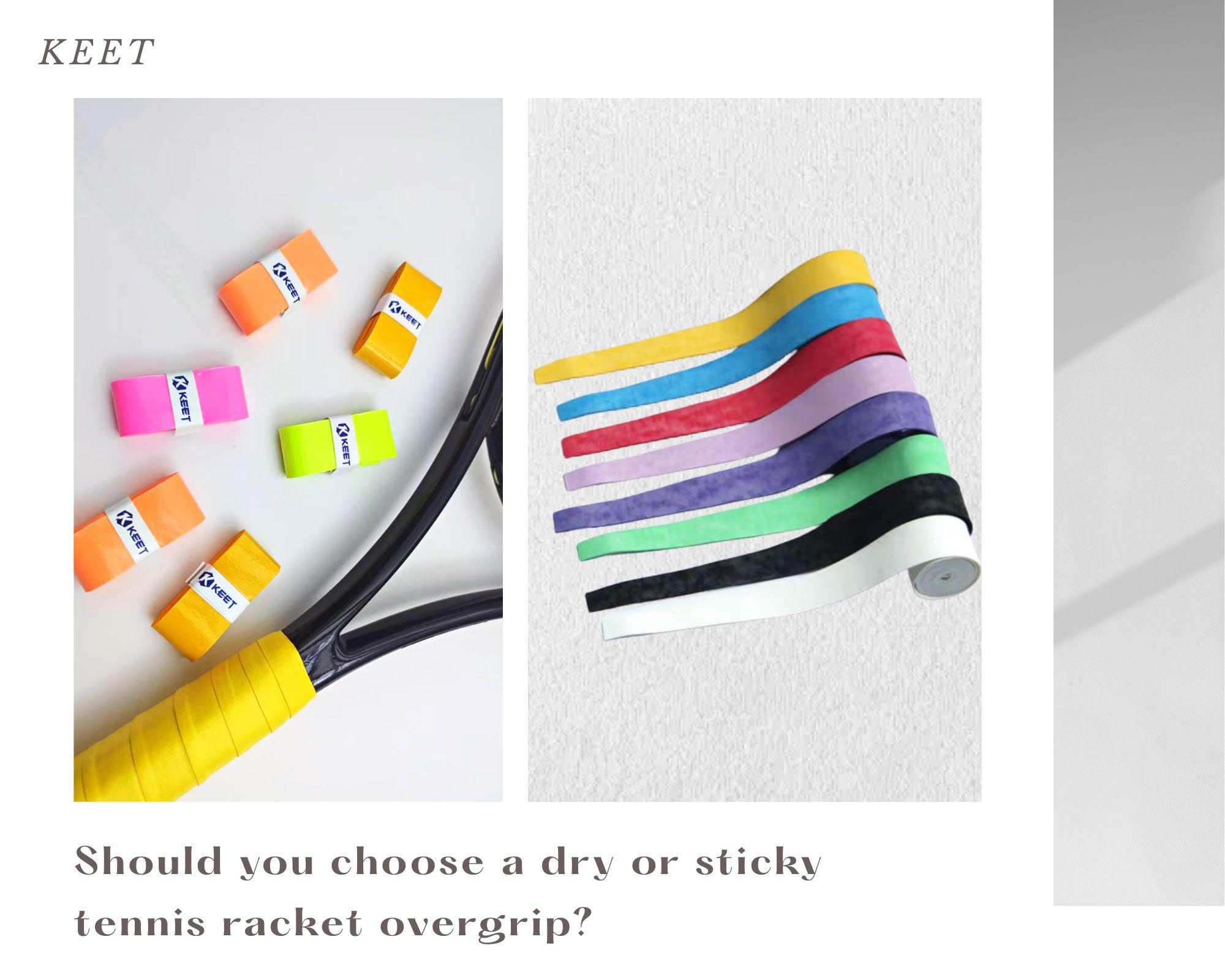
When picking a tennis racket overgrip, many players face a common dilemma: should they go for a dry one or a sticky one? This seemingly simple question actually involves factors like sweat volume, playing style, grip habits, and even personal preference, making it a decision that requires careful consideration. So how do you decide between a dry and a sticky overgrip?
First, you need to understand the essential differences between the two. A dry overgrip feels like fine sandpaper to the touch, with a distinct gritty texture. Its anti-slip function relies on the rough texture of the material. A sticky overgrip is the complete opposite: its surface is smooth and slightly adhesive. Instead of using texture, it uses the material's natural stickiness to "attach" your palm to the racket handle. These two totally different anti-slip principles lead to very different user experiences.
The biggest advantage of a dry overgrip is stability. It is not affected by sweat at all. Even after two hours of play when you are completely soaked, the overgrip surface remains dry, making it a lifesaver for heavy sweaters. It also usually lasts longer, as it does not degrade quickly from sweat and hand oils, easily lasting two to three months. However, it has clear downsides: the feel is relatively firm, and once the surface grit wears off, its anti-slip performance drops sharply — it may work fine one day and suddenly become slippery the next.
The advantage of a sticky overgrip is its soft feel. It is very soft and delicate, creating a "unified feel between player and racket" when you hold it, which many players who prioritize shot feedback prefer. When dry, it actually offers stronger anti-slip performance than dry overgrips, so you barely have to worry about the racket slipping out of your hands in the first few days after wrapping it. But its fatal weakness is that it cannot handle sweat. Once your palms sweat, the overgrip fails rapidly. This degradation is irreversible — it will not recover even after it dries. As a result, sticky overgrips need to be replaced much more often; heavy sweaters may need a new one every week or even after just a few matches.
So how do you choose tennis racket overgrip? The core criterion is simple: how much do your hands sweat? If your palms get soaked after just one game, do not hesitate — go straight for a dry overgrip. This is not a matter of preference, but a functional necessity. If you have naturally dry hands or only sweat slightly, a sticky overgrip will give you a better initial feel and more delicate feedback, making it well worth using. If you have low sweat volume but want a premium feel, sticky overgrip is indeed the better choice, but you have to accept that it has a shorter lifespan and needs frequent replacement.
Another often overlooked factor is weather and court conditions. Playing outdoors on hard courts in summer doubles your sweat output, making dry overgrips almost the only reliable option. Playing indoors in winter, when your palms barely sweat, allows the tacky overgrip's advantages to shine fully. So rather than seeing dry and sticky overgrips as two competing products, think of them as two solutions adapted to different environments.
There is no universal correct answer to choosing an overgrip — only the answer that fits your current situation. And that answer can usually only be truly confirmed after you have tried both types.




 Network Supported