
Some players may think any pickleball works just fine, and the number of holes makes no difference. This is actually a misunderstanding. The holes on a pickleball are never random decorative designs. The size, quantity and arrangement of every single hole are all precisely calculated to balance air resistance. The most common 26-hole and 40-hole pickleballs on the market may seem to differ by just 14 holes in number, but they actually belong to two completely different aerodynamic parameter systems that fundamentally determine the flight characteristics of the ball.
The 26-hole pickleball has fewer holes but larger apertures, with a more concentrated overall hollow area. Air can pass through the ball quickly, greatly increasing the air resistance during flight and intentionally keeping the ball speed in a relatively gentle range. This slow-speed design gives players more sufficient time to react and adjust. Even beginners can steadily catch the incoming ball. In indoor windless venues, the advantages of the 26-hole ball are fully unleashed. Free from the interference of external air currents, it bounces evenly and softly. Whether beginners are practicing basic blocking skills or advanced players are refining delicate tactics, they can get extremely stable feedback. Many people who play with 26-hole pickleball indoors enjoy a relaxed and smooth game rhythm, without being kept in a constant rush by overly fast ball speeds.
The 40-hole pickleball follows a completely opposite design logic. It has more holes with smaller apertures. The dense and symmetrical arrangement minimizes the drag coefficient of the ball. Meanwhile, the ball has a higher proportion of solid parts, making it slightly heavier overall. The biggest advantage of this design is its wind resistance. The annoying crosswinds and turbulent winds that trouble outdoor players are largely mitigated by the 40-hole pickleball. Even in breezy weather, the ball maintains uniform force across its 360-degree surface. It flies in a straight trajectory during high-speed hits and long-distance rallies, with exceptionally high landing point consistency. Straight shots hit with a 40-hole pickleball will hardly be blown off the sideline for no reason, greatly reducing the error rate throughout the match.
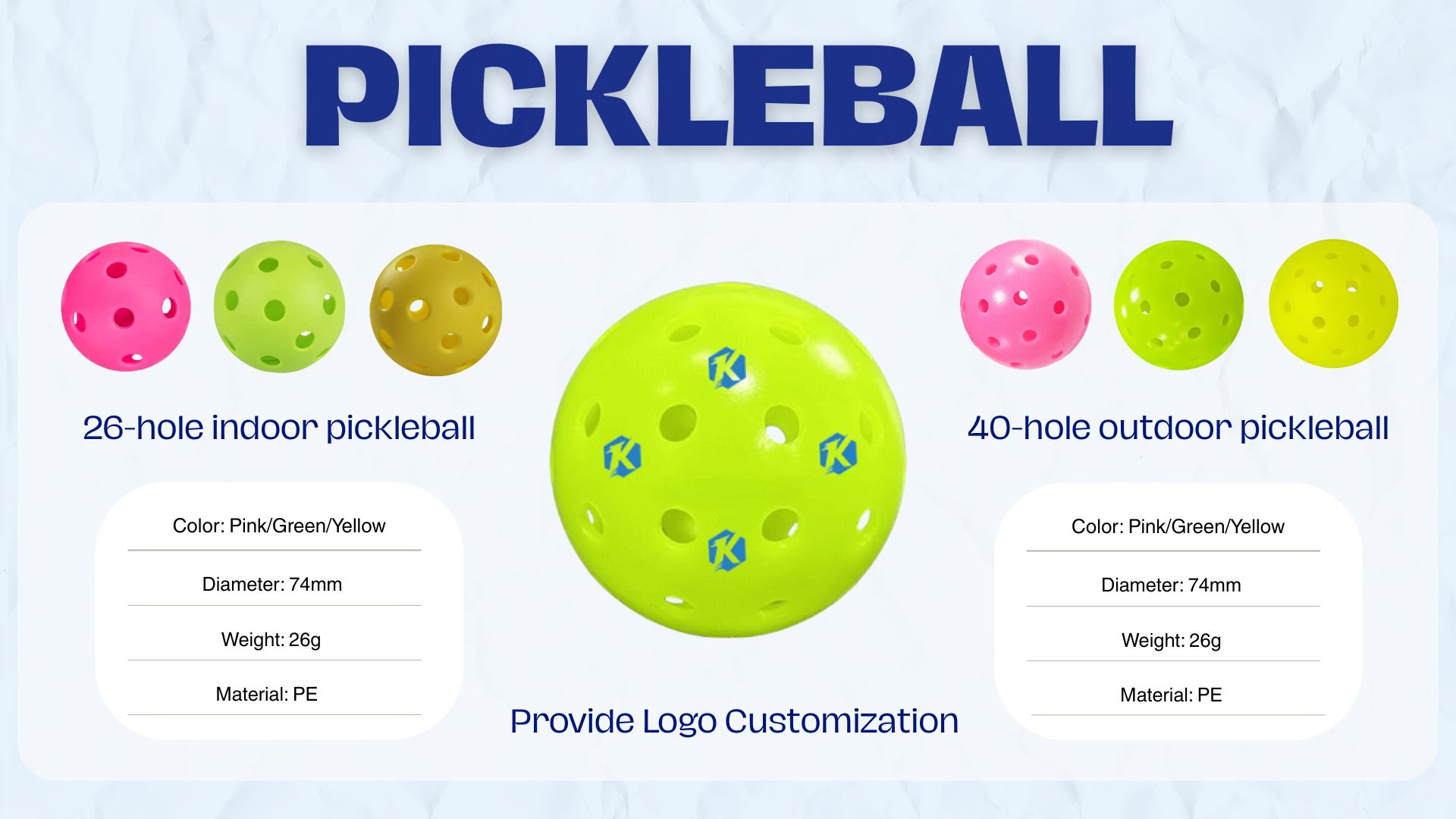
If you mix the two types of pickleballs without matching them to the scenario, your playing experience will be greatly compromised. In fact, there is no absolute good or bad when it comes to the number of pickleball holes. The core always lies in matching the ball to your playing scenario. There is no need to blindly pursue expensive professional tournament balls. For indoor training, beginner sessions and casual recreational games, a 26-hole pickleball can bring you a relaxed and smooth playing experience. For outdoor casual play, multi-player matches and official tournaments, the 40-hole ball will help you control the landing points perfectly.
Many players who have played for a long time always complain about frequent errors and poor hand feel, and their skills never improve even after long hours of practice. The truth is, they might just have picked the wrong number of holes on their pickleball. Once you adjust this most basic detail, the joy and overall experience of playing pickleball will immediately rise to a whole new level.
Please Read On, Stay Posted, Subscribe, And We Welcome You To Tell Us What You Think.
Connect With Us


Copyright @2024 Xiamen Keet Sports Technology Co., Ltd. All Rights Reserved. Sitemap/Blog/Xml/Privacy Policy  Network Supported