What functions does hockey grip tape have?
Dec 17, 2025
In the sport of hockey, which blends speed, strength, and precision, every touch between a player and their stick is crucial for tactical execution and the outcome of the game. The seemingly simple grip tape, in fact, serves as a vital link between the palm and the stick, enhancing athletic performance and safety through multiple functions such as anti-slip, sweat absorption, shock absorption, and stick protection.
I. Anti-slip
In hockey, players frequently perform high-intensity maneuvers such as sudden stops, directional changes, and powerful shots. Even a slight lack of friction between the palm and the stick can lead to the stick slipping out of hand or inaccurate shots. Grip tape increases friction through its surface texture, maintaining a stable grip. In professional matches, the anti-slip performance of grip tape directly determines whether a goalkeeper can firmly control their stick to block high-speed shots; for forwards, the gripping power of the tape is crucial for accurately executing technical moves during high-speed breakthroughs and sudden directional changes.
II. Sweat Absorption
Hockey matches are extremely intense, with players experiencing increased palm sweating during 70 minutes of high-intensity competition. If sweat is not promptly drained, it not only weakens the anti-slip effect but can also cause the stick to slip due to wet hands, potentially leading to muscle strains. Grip tape can quickly channels sweat to the surface for evaporation, keeping the grip dry and preventing sweat accumulation. Some professional players even adopt a "double-layer wrapping method": first wrapping a layer of ultra-thin sweat-absorbent tape as a base, then covering it with a layer of anti-slip grip tape to form a double sweat barrier.
III. Shock Absorption
The vibrations generated at the moment of striking the ball in hockey are transmitted through the stick to the wrist and arm, potentially leading to sports injuries over time. Grip tape, through material innovation and structural design, serves as the first line of defense against shock absorption. Especially for goalkeepers blocking high-speed shots, shock-absorbing grip tape can reduce arm fatigue and enhance continuous blocking ability.
IV. Stick Protection
The wooden grips of hockey sticks are highly susceptible to deformation and cracking due to sweat erosion, shortening their lifespan. Grip tape acts as a second skin for the stick, forming a protective barrier by isolating sweat, dust, and UV rays. Experiments show that stick grips without grip tape develop noticeable cracks after just three months of continuous use, while sticks wrapped with grip tape remain structurally intact even after a year of use.
V. Customization
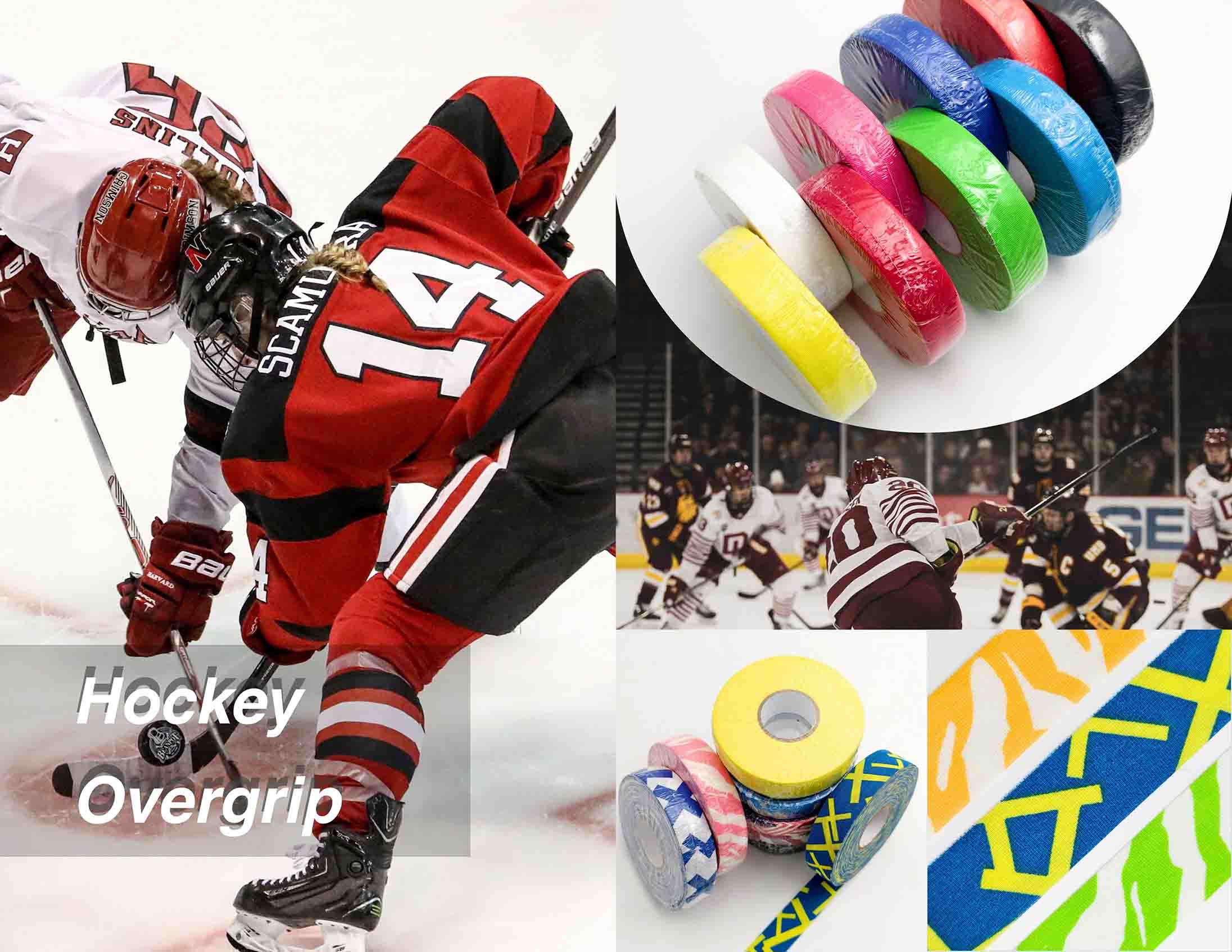
Modern grip tape has transcended traditional functional boundaries, evolving towards personalization and customization. Professional players select grip tape based on shot types: using thicker tape for powerful smashes to enhance power support, and switching to ultra-thin tape for net front intercepts to improve touch sensitivity; goalkeepers also distinguish between left and right-handed sticks by color to enhance reaction speed. Our KEET factory offers custom grip tape services, tailoring exclusive grip tape according to customer needs to meet diverse requirements.
In hockey, grip tape serves as an invisible link between a player's palm and the stick, not only fulfilling basic functions such as anti-slip and sweat absorption but also becoming a key piece of equipment for enhancing athletic performance through material and design innovations. From professional arenas to amateur training grounds, every iteration of grip tape reflects the ultimate pursuit of detail in sports technology.




 Network Supported