What's the difference between grip tape and replacement grip for pickleball paddles?
Mar 26, 2026
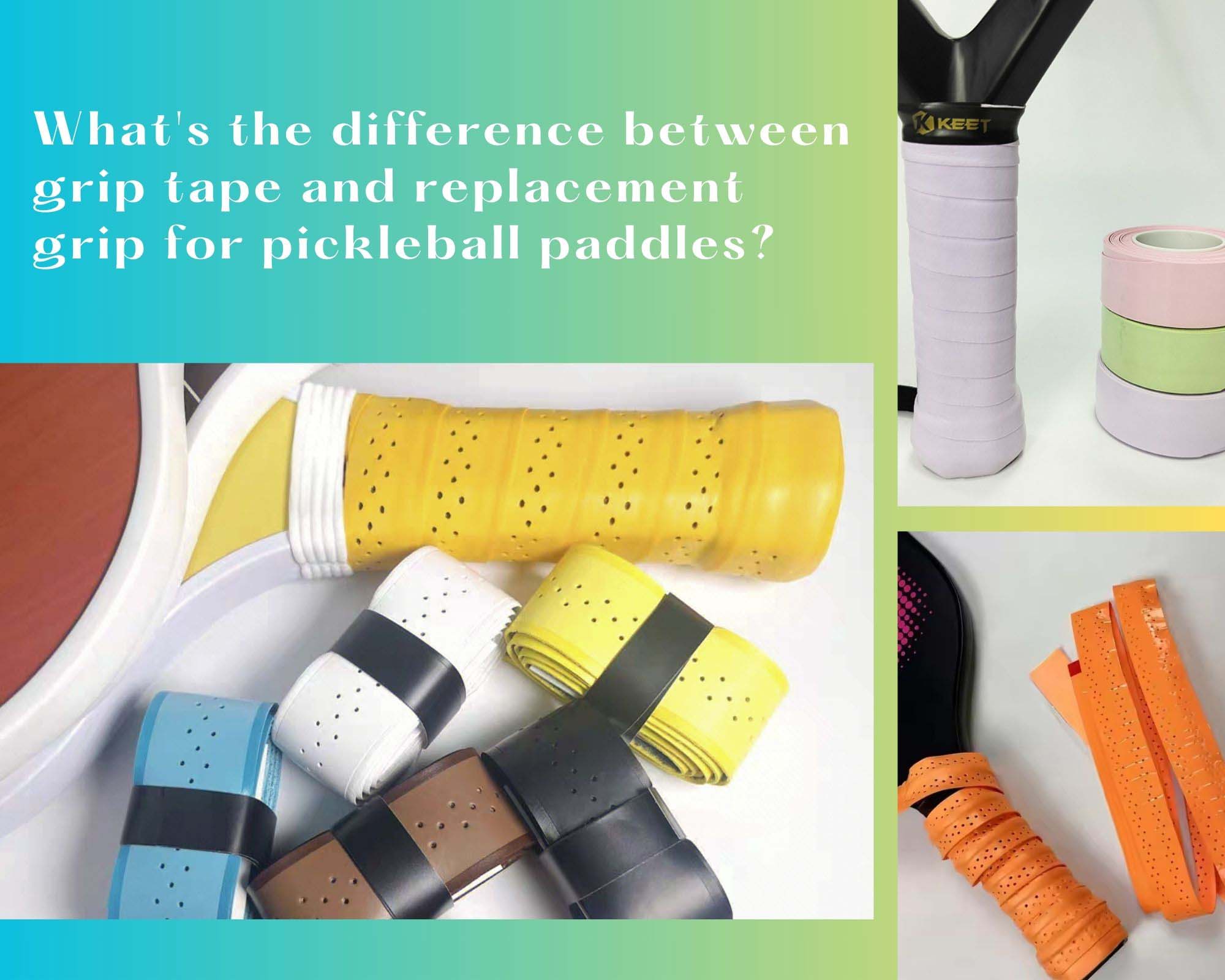
In pickleball, the design of a paddle's handle directly impacts grip, ball control precision, and athletic performance. Many players confuse the concepts of "grip tape" and "replacement grip" even mistakenly believing they are the same product. In reality, they differ fundamentally in function, material, replacement frequency, and other aspects. This article will analyze the differences between the two from dimensions such as structure, function, and applicable scenarios, helping players choose equipment scientifically.
I. Structural Positioning: Dual Layers with Clear Divisions of Labor
The replacement grip is the underlying structure of a paddle's handle, directly wrapped around the wooden or carbon fiber frame of the paddle handle. It is typically made of relatively thick materials, such as natural rubber or PU, with a thickness of up to 2-3 millimeters. The core function of the replacement grip is to provide basic grip support while absorbing vibrations during ball striking through shock-absorbing materials. It effectively disperses impact forces, reduces fatigue after long-term use, and protects the wrist and elbow joints.
Grip tape, on the other hand, is the outer decorative layer covering the surface of the replacement grip, usually less than 1 millimeter thick. It primarily consists of lightweight and soft materials, such as polyester fiber, microfiber, or ultra-thin PU. The original design intent of grip tape is to improve grip details—by adjusting thickness, stickiness, or sweat absorption, it meets different players' personalized needs for anti-slip, breathability, or shock absorption.
II. Functional Differences: Basic Support vs. Detail Optimization
·Anti-slip and Sweat Absorption: The special skills of grip tape
Although the replacement grip has some anti-slip properties, its material is relatively smooth and tends to become slippery over time due to sweat erosion. Grip tape, however, directly enhances friction through surface textures (such as honeycomb or striped patterns) or sticky coatings (such as tacky material), ensuring a stable grip even with excessive hand sweating. Additionally, grip tape's sweat absorption capacity is 3-5 times that of the replacement grip, quickly wicking away sweat to prevent the paddle handle from becoming slippery due to moisture.
·Shock Absorption and Comfort: The core mission of the replacement grip
The replacement grip absorbs ball-striking vibrations through its thick material and elastic structure, effectively filtering out over 70% of vibrations and reducing impact on the wrist. In contrast, grip tape has limited shock-absorbing effects. Its thin-layer design is more for supplementing the tactile deficiencies of the replacement grip, such as adding local cushioning with silicone particles or preserving the paddle's original balance with ultra-thin material.
·Durability and Cost: The long-term investment of the replacement grip
The replacement grip has a lower replacement frequency, typically needing replacement every 6-12 months (depending on usage intensity), and is relatively expensive. Grip tape, however, is a consumable that requires replacement every 1-4 weeks (more frequently in summer or during high-intensity training) but is inexpensive. This difference stems from material properties—the replacement grip must withstand long-term pressure and friction, while grip tape only needs to meet short-term grip demands.
III. Applicable Scenarios: Layered Selection Based on Needs
·Beginner Players: Prioritize optimizing the replacement grip
Beginners, due to their lack of technical proficiency, are more prone to injuries caused by a slippery paddle handle or excessive vibration. In this case, they should choose a replacement grip with good shock-absorbing properties and adjust grip details by wrapping grip tape on the outside. This not only reduces hand fatigue caused by gripping the paddle too tightly but also improves ball control stability through sweat absorption.
·Advanced Players: The customization space of grip tape
Advanced players have higher requirements for the thickness, stickiness, and sweat absorption of the paddle handle and can achieve fine-tuning by replacing grip tape. For example: Players with excessive hand sweating, they should choose dry grip tape made of microfiber material, whose friction coefficient increases with sweat, preventing traditional sticky grip tape from becoming slippery when wet. Players pursuing lightweight, they should opt for ultra-thin PU grip tape, which adds almost no weight to the paddle, suitable for doubles players who need quick swings.
Although both grip tape and replacement grip for pickleball paddles are handle accessories, they play vastly different roles—the replacement grip is the foundational structure, determining the paddle's shock-absorbing performance and long-term durability. Grip tape is the personalized outer layer, meeting players' needs for anti-slip, sweat absorption, or lightweight through material and texture adjustments. Understanding the differences between the two and scientifically selecting equipment based on one's technical stage and playing style characteristics is a crucial step in improving athletic performance. After all, in the millisecond-critical pickleball arena, every stable grip could be the key to determining victory or defeat.




 Network Supported