

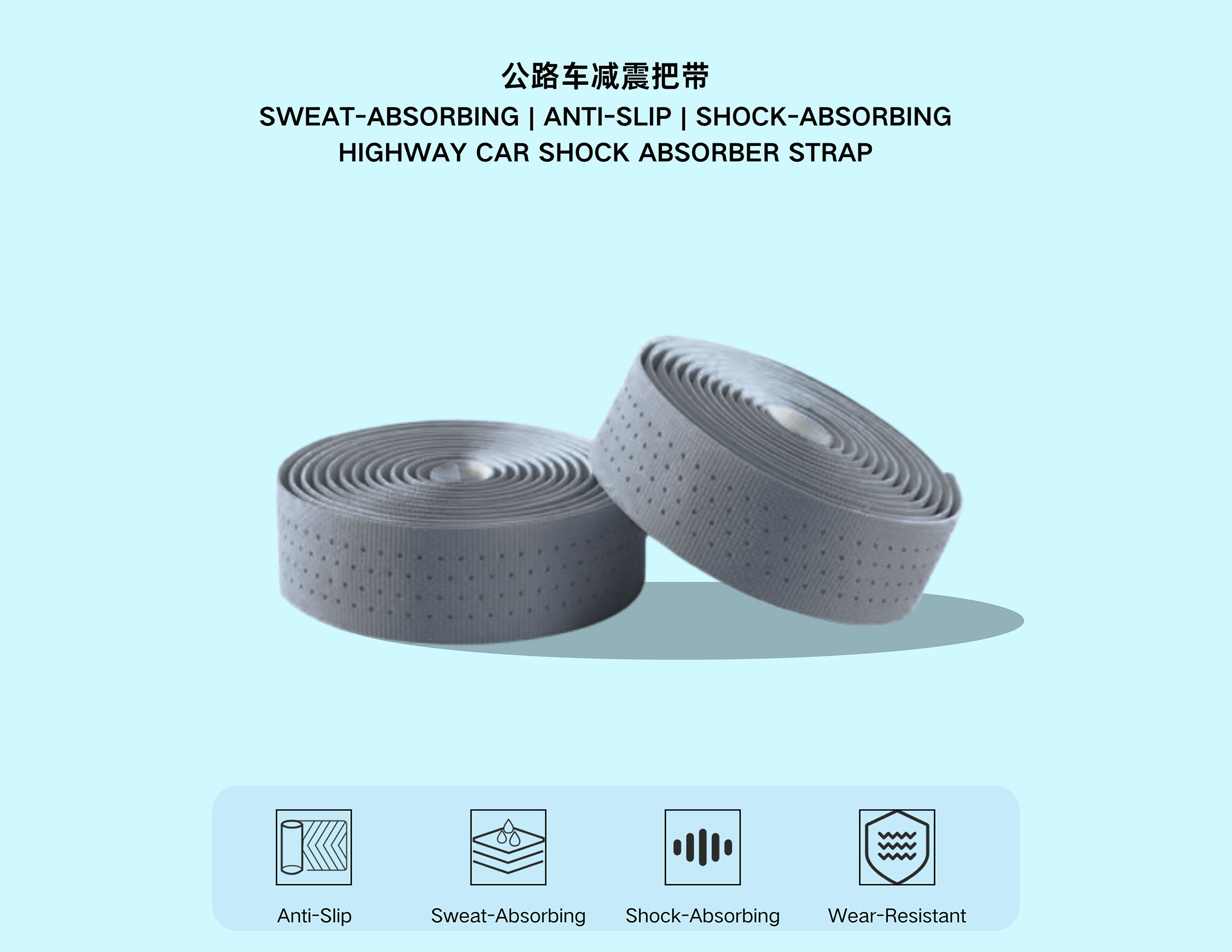
Bicycle handlebar tape represent one of the most direct contact points between the rider and the vehicle. Whether for urban commuting, road racing, or mountain biking, the design of bicycle handlebar tape directly influence riding comfort, control, and safety. As a critical accessory covering the handlebars, bicycle handlebar tape is often regarded as an "invisible guardian" that enhances riding quality. It is not merely a decorative or non-slip layer but creates a superior riding experience through multiple functions.
1. Enhancing grip comfort and reducing hand fatigue.
During prolonged rides, hands endure constant pressure and vibrations, which can lead to numbness, soreness, or even nerve compression symptoms. The materials used in bicycle handlebar tape typically offer elasticity and cushioning, effectively dispersing vibrations transmitted from the handlebars. This cushioning not only protects the palms but also reduces tension in the arm muscles, enabling riders to maintain a more natural hand posture during long-distance rides. Additionally, the thickness and texture design of the tape influence grip experience—excessive thinness lacks support, while excessive thickness may compromise control flexibility. Surface textures with raised and recessed patterns increase friction while promoting airflow, preventing hand slippage caused by sweat.
2. Improving control stability and ensuring riding safety.
At high speeds or on challenging terrain, precise handlebar control is crucial for safety. Handlebar tape increases friction, ensuring riders maintain a firm grip during intense shaking or emergency maneuvers. For instance, when road cyclists sprint downhill, nervousness can cause sweaty hands, tape with anti-slip patterns prevents the risk of losing grip. Furthermore, the tape fills minor gaps between the handlebars and gloves, creating a tighter contact surface and enhancing the clarity of control feedback.
3. Protecting handlebars and extending service life.
Metal or carbon fiber handlebars exposed to the elements are vulnerable to reduced strength due to sweat corrosion, UV aging, or impact damage. Handlebar tape acts as a protective layer, isolating corrosive substances like sweat and rainwater to slow down surface oxidation. For carbon fiber handlebars, the tape also reduces surface wear from prolonged gripping, preventing fiber exposure that could compromise structural safety and further ensuring riding safety.
4. Personal expression and style customization.
Beyond functionality, handlebar tape serves as a highly personalized component of cycling gear. From classic black to fluorescent hues, and from minimalist solid colors to patterned designs, the colors and textures of handlebar tape instantly reflect a rider's aesthetic preferences and attitude. Professional teams often use customized tape to reinforce team branding, while casual riders may select tape that complements their bike's color scheme for a cohesive visual effect. This attention to detail not only adds a sense of ritual to riding but also helps riders stand out in competitions.
Bicycle handlebar tape is not an optional accessory but a key component integrating ergonomics, material science, and safety design. By enhancing comfort, ensuring control, protecting handlebars, and expressing individuality, it becomes an indispensable part of the riding experience. Whether for competitive cyclists chasing speed or leisure riders savoring scenery, choosing the right handlebar tape represents a dual investment in riding quality and personal safety.
Please Read On, Stay Posted, Subscribe, And We Welcome You To Tell Us What You Think.
Connect With Us


Copyright @2024 Xiamen Keet Sports Technology Co., Ltd. All Rights Reserved. Sitemap/Blog/Xml/Privacy Policy  Network Supported